
Premium Quality Ibogaine Supplier.
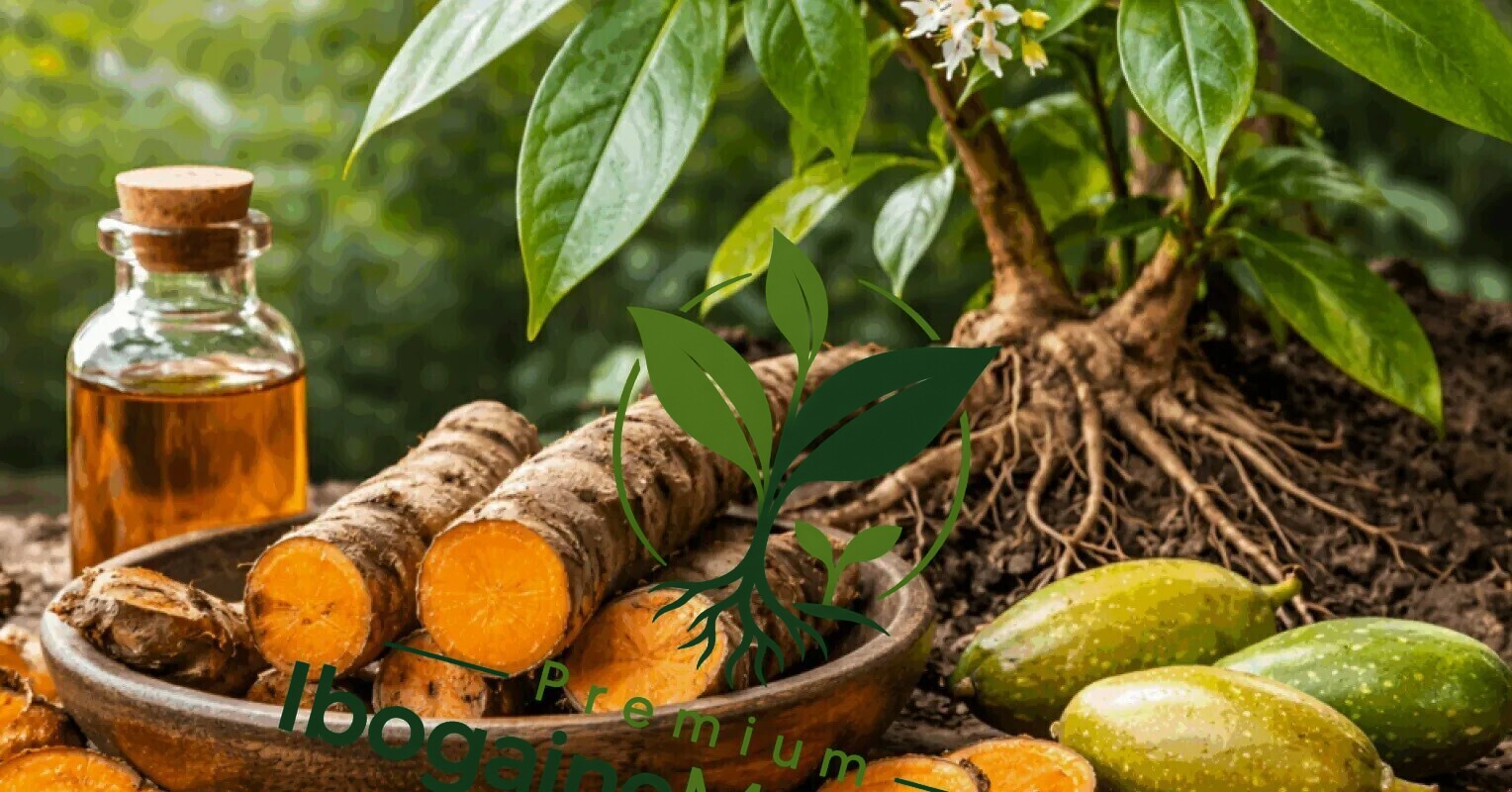
Tabernanthe iboga is a tropical shrub from Central Africa that has attracted interest from botanists, ethnobotanists, natural-product researchers and scientists studying iboga alkaloids.
Although the plant is often discussed online primarily in connection with ibogaine, Tabernanthe iboga is much more than the source of a single chemical compound. It is a botanical species with its own taxonomy, ecology, traditional history, cultivation requirements and conservation considerations.
Understanding the plant itself is therefore essential for anyone interested in iboga research.
This guide examines the botanical identity of Tabernanthe iboga, where it grows, the characteristics of its roots, root bark and seeds, and why cultivation and sustainable sourcing matter.
Tabernanthe iboga is a species in the family Apocynaceae.
It is commonly associated with tropical Central Africa and is particularly connected with countries such as Gabon and Cameroon.
The plant has historically been valued for traditional purposes in communities where iboga has cultural significance.
From a scientific perspective, its importance comes partly from the complex mixture of alkaloids present in different plant tissues.
Ibogaine is one of the best-known alkaloids associated with the species, but it is not the only compound found in the plant.
This distinction matters.
A botanical plant and an isolated chemical compound are not interchangeable concepts.
Tabernanthe iboga is associated with humid tropical environments in Central Africa.
Its natural environment is characterized by warm temperatures, substantial rainfall and forest ecosystems.
The exact distribution and abundance of the species can vary according to ecological conditions and local land use.
The plant’s association with tropical forest environments also means that cultivation cannot simply be approached as if it were a conventional annual agricultural crop.
Long-term plant health depends on suitable environmental conditions.
Cameroon is one of the Central African countries associated with Tabernanthe iboga.
The country has substantial ecological diversity, ranging from coastal environments and lowland forests to highland agricultural zones.
This creates different opportunities and constraints for botanical cultivation.
For agricultural development, the first priority should be correct botanical identification.
A plant should not be treated as Tabernanthe iboga merely because it has a similar appearance or has been sold under an iboga-related name.
Professional cultivation should therefore begin with reliable source material and appropriate botanical verification.
Cameroon offers an important setting for agricultural and botanical research because of its biodiversity and established agricultural communities.
Responsible cultivation can potentially contribute to:
However, cultivation should be planned carefully to avoid unnecessary pressure on natural ecosystems.
Gabon has a particularly strong cultural and historical association with iboga.
The plant has long-standing importance within Bwiti traditions, making it relevant not only from a botanical perspective but also from an ethnobotanical and cultural perspective.
This cultural history is important when discussing iboga responsibly.
Commercial interest should not erase the fact that iboga has significance beyond the modern scientific and commercial markets.
Understanding the plant requires recognition of its traditional context as well as its chemistry.
A basic classification of Tabernanthe iboga is useful for distinguishing the plant from related species.
| Classification | Taxonomic group |
|---|---|
| Kingdom | Plantae |
| Family | Apocynaceae |
| Genus | Tabernanthe |
| Species | Tabernanthe iboga |
The family Apocynaceae contains numerous plant species, including several that produce biologically active compounds.
This is one reason botanical identification should be treated seriously.
A common name may refer to different plants in different locations, while scientific nomenclature provides a more precise framework for identification.
Tabernanthe iboga is a shrub-like plant adapted to tropical environments.
The plant develops stems, leaves, flowers and fruits, with roots forming an important underground structure.
Depending on age and environmental conditions, individual plants can differ in size and appearance.
The leaves are green and arranged along the stems.
Leaf characteristics can assist botanical identification but should not be relied upon alone when confirming species identity.
The plant produces flowers that are characteristic of its botanical family.
Flowering and fruiting behavior can vary according to environmental conditions.
Following flowering, the plant develops fruit containing seeds.
These reproductive structures are important for cultivation and propagation.
The root system plays an important role in the biology of Tabernanthe iboga.
Roots provide structural support and are involved in water and nutrient uptake.
They also contain naturally occurring alkaloids, which is one reason the root has historically attracted scientific and traditional interest.
From a conservation perspective, root harvesting deserves particular attention.
Removing substantial portions of a root system can damage or kill an individual plant.
This creates an important distinction between harvesting renewable plant parts and harvesting material that may compromise plant survival.
The term “iboga root bark” generally refers to the bark or outer tissue associated with roots.
It is important to distinguish botanical terminology from commercial terminology because products sold under similar names may vary significantly in composition and processing.
For research purposes, documentation should ideally identify:
This type of traceability becomes particularly important when researchers compare results between samples.
Seeds are central to the long-term cultivation of Tabernanthe iboga.
Unlike root material, seeds provide a mechanism for producing new plants.
Seed-based propagation can therefore play a role in reducing pressure on mature wild plants.
However, seeds also require appropriate handling.
Their viability may depend on factors including:
A professional cultivation program should document seed provenance wherever practical.
Traditional harvesting practices differ according to community, location and cultural context.
Historically, roots and other plant material have been collected for cultural and traditional purposes.
However, traditional harvesting should not automatically be equated with modern commercial supply.
The scale, frequency and purpose of harvesting can be very different.
Commercial demand can place additional pressure on plant populations if harvesting is not carefully managed.
This is why cultivation and conservation have become increasingly important considerations.
Cultivation can provide a more controlled way of producing botanical material.
A managed farm allows growers to document:
This information can improve traceability.
Cultivation can also support conservation by reducing dependence on unmanaged wild collection.
However, cultivated production must still be environmentally responsible.
Successful cultivation begins with selecting a suitable environment.
Because the plant is associated with humid tropical conditions, growers should consider:
Warm conditions and adequate moisture are important for healthy development.
Soils should support drainage while retaining enough moisture for plant growth.
Young plants may benefit from environmental conditions resembling their natural forest habitat, depending on the cultivation system.
Consistent access to appropriate moisture is important, particularly during establishment.
Spacing should provide sufficient room for plants to develop while allowing farm workers to maintain the crop.
A nursery can help establish young plants before they are transferred into larger growing areas.
A structured nursery system may include:
Good nursery records can also help maintain traceability.
Long-term cultivation depends on maintaining productive soil.
Responsible farming may involve:
Agricultural practices should be adapted to local environmental conditions rather than applying a single method to every location.
Harvesting is one of the most important stages from a conservation perspective.
If the commercial objective is to obtain root material, growers must recognize that root harvesting can have a substantial effect on plant survival.
A sustainable system therefore needs to consider how mature plants are managed and how new plants replace harvested material.
This may involve maintaining dedicated cultivation blocks for future production rather than relying on unmanaged natural populations.
The scientific name Tabernanthe iboga is important because common names can be ambiguous.
Correct identification is especially important when:
Misidentification can compromise research results and potentially create safety concerns.
Tabernanthe iboga contains a complex mixture of naturally occurring alkaloids.
Ibogaine is the most widely recognized, but other alkaloids are also present.
The chemical profile can vary depending on factors such as:
This variability is one reason standardized research material is important.
Modern ibogaine research increasingly demonstrates why botanical knowledge matters.
Scientists investigating ibogaine and related compounds need to understand where the original material comes from and how botanical variables may affect chemical composition.
Meanwhile, synthetic chemistry is opening additional routes for studying iboga-related molecules. Research published in Nature Chemistry in 2025 demonstrated a scalable synthetic approach to ibogaine and related alkaloids, expanding opportunities for medicinal-chemistry research.
This does not remove the importance of the plant.
Instead, it creates two complementary research pathways:
Natural-product research: studying compounds as they occur in the plant.
Medicinal chemistry: modifying or synthesizing related compounds to investigate biological properties.
The growing interest in ibogaine makes sustainable sourcing increasingly important.
Responsible sourcing should consider both environmental and social factors.
A strong sourcing framework may include:
For companies operating in Cameroon and other Central African countries, conservation should be considered part of responsible commercial development.
As scientific interest increases, the demand for consistent
may also grow.
This creates opportunities for agricultural development but also responsibilities.
Future cultivation programs may benefit from:
The goal should be to create agricultural systems that can supply legitimate research demand without compromising natural resources.
No. Tabernanthe iboga is the plant species. Ibogaine is one of the naturally occurring alkaloids associated with the plant.
The species is associated with tropical Central Africa, including areas of Cameroon and Gabon.
Alkaloids occur in different tissues, with roots being particularly important in traditional use and scientific interest.
Seeds allow the plant to be propagated and can support long-term cultivation programs.
Cultivation can reduce pressure on natural populations, but its sustainability depends on how the farm is managed.
Tabernanthe iboga is a scientifically interesting, culturally significant and ecologically important Central African plant.
Its importance extends beyond ibogaine.
Understanding the species requires consideration of its taxonomy, natural environment, roots, root bark, seeds, traditional use, chemical constituents and cultivation requirements.
As modern research expands, responsible botanical sourcing will become increasingly important. Accurate identification, traceability, cultivation and conservation can help create a more sustainable relationship between scientific research and the natural resources from which that research originated.
For Cameroon and other Central African countries, responsible cultivation also has the potential to support agricultural development and local employment while contributing to the preservation of an important botanical resource.