
Premium Quality Ibogaine Supplier.
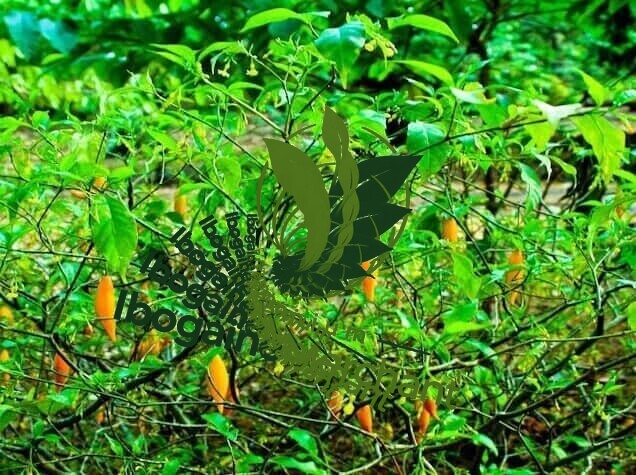
Ibogaine research 2026 has entered a particularly important period. Interest in the naturally occurring alkaloid has expanded beyond specialist psychedelic research communities into mainstream scientific, political and pharmaceutical discussions. At the same time, researchers continue to emphasize an important distinction: growing interest does not automatically mean that clinical effectiveness or safety has been established.
Ibogaine is an alkaloid associated with Tabernanthe iboga, a shrub native to Central Africa. Scientific interest has focused particularly on its effects on the nervous system, its metabolism into noribogaine, and its possible relevance to substance-use disorders and other neuropsychiatric conditions.
Recent publications have added useful information, but they have not eliminated the need for rigorous clinical trials.
For anyone researching ibogaine in 2026, the most useful question is therefore not simply “Does ibogaine work?” It is:
What does the evidence currently show, what remains uncertain, and what research needs to happen next?
Ibogaine is a naturally occurring indole alkaloid found primarily in the roots and root bark of Tabernanthe iboga.
The plant has a long history of traditional use in Central Africa, particularly in Gabon and neighboring regions. Modern scientific interest in ibogaine began to develop during the twentieth century, with researchers investigating its pharmacological properties and possible effects on substance dependence.
Ibogaine is pharmacologically complex. Rather than acting through a single biological target, it interacts with multiple neurotransmitter systems. After administration, the compound is metabolized into noribogaine, which also has pharmacological activity.
This complexity is one reason researchers remain interested in the compound.
It is also one reason ibogaine cannot be reduced to a simple description such as “psychedelic drug” or “addiction treatment.”
Several factors have contributed to renewed scientific interest.
First, substance-use disorders remain a major public-health challenge, creating interest in treatments that could operate through mechanisms different from conventional medications.
Second, observational reports have repeatedly suggested that some individuals experience substantial changes in substance-use patterns following ibogaine exposure.
Third, researchers have become increasingly interested in neuroplasticity and compounds capable of producing persistent changes in neural systems.
Finally, the broader growth of psychedelic research has created a scientific environment in which previously neglected compounds are being investigated more systematically.
A 2026 scoping review published in the Journal of Psychopharmacology examined human research involving ibogaine and noribogaine and concluded that preliminary evidence is accumulating, while also emphasizing the limited number of randomized controlled trials and the need for further research into efficacy and safety.
One of the most important developments is the continued effort to move from anecdotal and observational evidence toward controlled research.
The 2026 scoping review identified only a small number of randomized controlled trials involving ibogaine or noribogaine. Among the studies reviewed were research involving cocaine dependence, healthy volunteers and opioid-dependent participants receiving noribogaine.
This is important because randomized controlled trials can help distinguish the effects of a compound from expectations, natural changes over time and other factors.
However, the small number of controlled studies means the evidence base remains relatively limited.
Much of the scientific interest in ibogaine concerns substance-use disorders.
Researchers have investigated whether ibogaine or noribogaine may affect processes associated with craving, withdrawal and substance-use behavior.
The available evidence includes observational studies, retrospective reports and a smaller number of controlled experiments.
Some findings are encouraging, but researchers continue to caution that uncontrolled studies can produce misleading estimates of effectiveness.
A 2026 literature review covering three decades of ibogaine research concluded that much of the positive efficacy evidence comes from uncontrolled, open-label or retrospective research and that no double-blind randomized controlled trial had established ibogaine’s effectiveness for opioid-use disorder.
That distinction is essential when interpreting headlines about ibogaine.
Ibogaine has also attracted interest in areas including post-traumatic stress symptoms, depression and traumatic brain injury.
One frequently discussed study was published in Nature Medicine in 2024. It examined a magnesium–ibogaine protocol in 30 male Special Operations Forces veterans with predominantly mild traumatic brain injury.
The researchers reported improvements in several measures following treatment, including functioning, PTSD, depression and anxiety. However, the study was observational and open-label rather than a randomized controlled clinical trial. The authors explicitly stated that controlled trials were needed to validate the findings.
This makes the study scientifically interesting without making it definitive.
Suppose ten people receive an experimental treatment and eight report improvement.
That observation may be important, but it cannot by itself establish that the treatment caused the improvement.
Researchers must account for:
Randomized and controlled research is designed to address many of these problems.
This is why the next generation of ibogain research is likely to be judged less by the number of testimonials and more by the quality of controlled evidence.
One of the most important issues surrounding ibogaine is cardiac safety.
Research and clinical reports have associated ibogaine exposure with changes in cardiac electrical activity, including QT-interval prolongation. In susceptible individuals, disturbances in cardiac electrical activity can increase the risk of dangerous arrhythmias.
The 2026 literature review highlighted QT prolongation and cardiotoxicity as significant concerns that remain relevant to ibogaine research.
This is one reason responsible research protocols require careful medical and scientific oversight.
The question is not simply whether ibogaine can produce a particular psychological effect.
Researchers must also determine:
These questions are central to responsible drug development.
Ibogaine does not remain unchanged in the body.
It is metabolized into noribogaine, which has its own pharmacological properties.
This has created interest in whether some of the effects associated with ibogaine could be separated from other effects through research into metabolites or related compounds.
The distinction is scientifically important because researchers are interested in finding ways to preserve potentially useful biological activity while reducing unwanted effects.
In 2026, research therefore extends beyond the natural plant compound itself.
Scientists are also investigating:
A significant development came from synthetic chemistry research published in Nature Chemistry in 2025.
Researchers reported a gram-scale, seven-step synthesis of ibogaine and demonstrated approaches for producing additional iboga alkaloids and analogues. Their biological experiments included work on an ibogaine analogue and neuronal growth-related activity.
This type of research is important because drug development does not necessarily require researchers to rely exclusively on extracting a compound from its original plant source.
Synthetic chemistry can allow scientists to investigate related structures systematically.
The broader objective is to understand which molecular features are associated with desired biological effects and which may contribute to unwanted effects.
The development of synthetic chemistry does not make the plant irrelevant.
Tabernanthe iboga remains important as the natural biological source that led to the discovery and scientific investigation of iboga alkaloids.
The plant is also important from botanical, ecological and cultural perspectives.
For researchers studying natural products, maintaining access to correctly identified plant material can remain valuable for:
This makes responsible cultivation and botanical identification increasingly important.
Natural-product research depends on reliable source material.
Variation in growing conditions, genetics, plant age, plant part and post-harvest handling can affect botanical materials.
A professionally managed cultivation program can potentially improve traceability by documenting:
Such information can be valuable when researchers need to reproduce experiments or compare samples.
As scientific and commercial interest grows, conservation becomes increasingly important.
A plant-based supply chain that depends entirely on wild harvesting can create pressure on natural populations if demand becomes substantial.
Cultivation can offer one part of a broader conservation strategy.
However, cultivation should not automatically be described as sustainable simply because plants are grown commercially.
Responsible cultivation requires attention to:
For Tabernanthe iboga, the long-term goal should be to create a relationship between research demand and responsible resource management.
Despite growing interest, substantial gaps remain.
Small studies can identify promising signals but cannot provide the same level of evidence as adequately powered randomized trials.
Researchers need better information about longer-term effects and potential risks.
QT prolongation remains a major concern and requires continued investigation.
Researchers need systematic evidence concerning how different exposure levels relate to both benefits and adverse effects.
People with substance-use disorders may take other medications or substances, making interaction research particularly important.
Research is easier to interpret when investigators know exactly what compound and formulation participants received.
Scientists still need to understand which biological mechanisms are responsible for particular effects.
The biggest change is arguably not one single scientific discovery.
Instead, iboga has moved further into a period of formal scientific and regulatory attention.
A 2026 review provides a more updated picture of the human evidence base, while political and institutional interest has also increased. Recent reporting has described new U.S. efforts to accelerate psychedelic research and funding initiatives related to ibogaine.
However, regulatory attention should not be confused with regulatory approval.
In other words:
More research funding does not mean that ibogaine has been proven safe or effective.
It means researchers have an opportunity to generate better evidence.
The most important developments will likely involve controlled clinical research, improved safety protocols and new iboga-related compounds.
Researchers and scientific organizations should watch for:
The publication of results is particularly important.
A registered clinical trial can demonstrate that researchers intended to study a particular question. But until results are published or otherwise made available, the public cannot properly assess whether the study produced evidence supporting or contradicting the original hypothesis.
As research expands, the quality of research materials becomes increasingly important.
Research institutions need reliable information about the identity and provenance of botanical material.
A responsible supplier should therefore place emphasis on:
For companies working with Tabernanthe iboga, commercial growth should not be separated from environmental and scientific responsibility.
Ibogaine research in 2026 presents a picture of genuine scientific interest combined with substantial uncertainty.
There are encouraging findings from observational research and early clinical studies, but the strongest conclusions remain limited by small sample sizes, uncontrolled designs and unresolved safety questions. Recent reviews reinforce the need for more rigorous clinical research rather than premature conclusions.
At the same time, advances in synthetic chemistry are expanding the field beyond the naturally occurring compound, allowing researchers to investigate related alkaloids and analogues.
For Tabernanthe iboga, this evolving research environment creates an equally important need for responsible cultivation, conservation, botanical identification and traceable research supply.
The future of this products research will ultimately depend on evidence. The most valuable progress will come from well-designed studies, transparent reporting, careful safety assessment and responsible management of the botanical resources that helped make this research possible.