
Premium Quality Ibogaine Supplier.

Order top quality Iboga roots from a trusted and reliable supplier today.
we offer premium quality ibogaine Cameroon and Gabon in Huge quantities.
Tested, Trusted and affordable.
Tabernanthe iboga roots are the underground portion of the iboga plant, a Central African botanical species belonging to the Apocynaceae family. For international botanical buyers, Cameroon-origin iboga roots provide access to plant material sourced from the natural geographic context of the species.
Our Tabernanthe iboga roots are supplied as botanical material from Cameroon for qualified customers with lawful and appropriate requirements. We focus on responsible sourcing, botanical identity, careful handling and transparent communication throughout the supply process.
Iboga roots are distinct from iboga root bark. While the root is the complete underground plant structure, root bark refers specifically to the outer bark or bark-containing portion of the root. This distinction is important when specifying a product, comparing materials or preparing an international order.
Iboga roots are the underground structures of Tabernanthe iboga. Like the roots of other plants, they play important biological roles in anchoring the plant and supporting its uptake and storage of water and nutrients.
In traditional contexts, different parts of the iboga plant have been used by communities in Central Africa. The plant has particular cultural importance in parts of the region, including Cameroon and neighboring countries.
From a botanical supply perspective, however, it is important to distinguish traditional knowledge from modern commercial descriptions. Our product is supplied as botanical plant material, and information concerning traditional or scientific interest should not be interpreted as a recommendation for medical or therapeutic use.
Tabernanthe iboga
Apocynaceae
Iboga
Iboga root
Cameroon, Central Africa
Correct botanical identification is fundamental when supplying plant material internationally. Common names can sometimes be used for multiple species or materials, whereas the scientific name provides a much more precise reference point.
For buyers with specific identification, analytical or documentation requirements, those requirements should be communicated before an order is finalized.
Cameroon forms an important part of the natural and cultural range associated with Tabernanthe iboga. The country’s Central African ecosystems provide the environmental context in which the species occurs, while local communities possess knowledge concerning the plant and its traditional significance.
For a botanical exporter, geographic origin is an important part of product identity.
When buyers ask where iboga roots come from, they are not simply asking for a country name. They may also want to understand:
The sourcing region can provide important context about the botanical material.
Harvesting practices can influence both the quality of the material and the long-term availability of the species.
Roots need to be appropriately handled after harvesting to maintain their physical condition during preparation and shipment.
Clear sourcing and batch information can help create greater transparency between supplier and buyer.
Our approach is therefore based on treating origin, handling and traceability as important parts of the product rather than as secondary details.
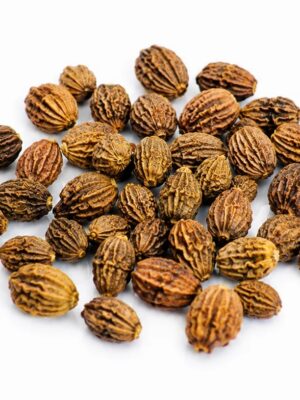
The physical characteristics of iboga roots can vary depending on factors such as plant age, growing conditions, root size, harvesting practices and subsequent handling.
As a natural botanical material, roots should not be expected to have exactly identical characteristics from one batch to another.
Potential characteristics buyers may consider include:
Root pieces may vary in length and diameter depending on the source material and processing method.
The physical texture of a dried root can differ depending on how the material was prepared and dried.
Color can vary according to the age and condition of the root, environmental conditions and post-harvest handling.
Appropriate handling and storage are important for maintaining the condition of dried botanical material.
Material should be handled in a manner designed to minimize unwanted foreign material.
These characteristics should be evaluated in the context of the particular product lot rather than used as universal specifications.
This distinction deserves particular attention.
Iboga root refers to the underground root material itself.
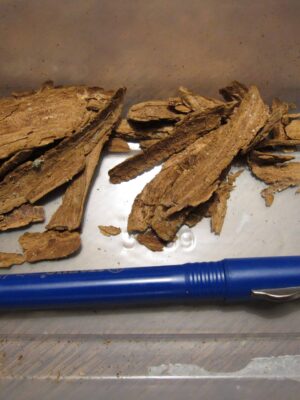
Iboga root bark refers to the bark portion associated with the root.
These are therefore related but different botanical materials.
A buyer who requires root should specify iboga root, while a buyer who specifically requires the bark portion should specify iboga root bark.
Clear product terminology helps avoid misunderstandings during quotation, packaging, documentation and shipment.
Cameroon-origin botanical material can be particularly relevant to buyers looking for plant material connected to the natural geographic range of Tabernanthe iboga.
Our focus is on providing a direct and transparent supply channel for Cameroon-origin material while developing responsible relationships within the local supply chain.
For international customers, sourcing directly from a country associated with the plant can also make it easier to discuss:
Our objective is not simply to supply a botanical commodity, but to provide customers with useful information about the material they are purchasing.
Responsible sourcing is particularly important for botanical species that are harvested from natural environments.
The commercial demand for a plant should not be separated from the ecological conditions that support its continued existence.
Our sourcing approach emphasizes responsible relationships with the plant, its environment and the people involved in the supply chain.
Where applicable, responsible sourcing may involve consideration of:
Harvesting should take into account the biology of the plant and the long-term availability of the resource.
Understanding where material originates can help provide greater visibility into the supply chain.
Cultivation and propagation may provide opportunities to complement wild-source material and support longer-term availability.
Local knowledge and participation are important components of responsible botanical supply.
Sustainable supply should consider not only today’s order but also the future availability of the species.
Roots are fundamentally different from seeds because harvesting a root involves taking an underground part of an established plant.
Consequently, responsible harvesting requires careful consideration of how the plant and its surrounding population are affected.
The precise harvesting practices used by a supplier should be communicated honestly and should reflect the actual supply chain.
We do not believe that sustainability claims should be based on vague statements such as “100% sustainable” without explaining what that means in practice.
Instead, buyers should be able to ask questions about:
We encourage international buyers to discuss these requirements with us when evaluating an order.
After harvesting, botanical roots may undergo several stages of preparation before being packaged for shipment.
Depending on the specific supply arrangement, these can include:
Material may be cleaned and prepared for further handling.
Roots may be supplied whole or in prepared pieces depending on the product specification.
Appropriate drying and storage conditions can be important for maintaining the physical condition of botanical root material.
Material may be sorted according to agreed product requirements.
The final material is prepared for transportation according to the quantity and destination.
The precise processing method should always be confirmed with the supplier because products described as “iboga root” may be prepared differently depending on customer specifications.
Quality begins with the identity and source of the botanical material.
Our approach to quality focuses on maintaining clear information throughout the supply process and ensuring that customers understand what they are purchasing.
Important quality considerations include:
The material should correspond to the stated botanical species.
Information about origin helps provide context for the material.
The appearance and condition of the material can be considered during quality evaluation.
Appropriate handling and sorting can help minimize unwanted material.
Where applicable, batch information can improve traceability.
The documentation available for a shipment depends on the product, destination and applicable requirements.
Traceability allows a buyer to understand where a botanical material originated and how it moved through the supply chain.
For iboga roots, useful traceability information may include:
SOURCE
   ↓
HARVEST
   ↓
COLLECTION
   ↓
PROCESSING
   ↓
BATCH
   ↓
PACKAGING
   ↓
EXPORT
The level of information available can vary according to the supply arrangement.
For larger or recurring orders, buyers can discuss their traceability requirements before placing an order.
We can discuss wholesale supply for organizations seeking Tabernanthe iboga roots from Cameroon.
Wholesale inquiries are best handled individually because requirements can differ considerably between customers.
A buyer may require:
Small commercial orders and larger bulk requirements may require different sourcing arrangements.
Customers may require whole roots, prepared pieces or another agreed specification.
Packaging requirements can vary according to quantity and destination.
International shipments may require specific documentation depending on the destination.
Organizations with ongoing requirements can discuss their anticipated purchasing schedule.
Providing these details during an initial inquiry allows us to determine whether the requested material and supply arrangement are available.
Our focus is on connecting Cameroon-origin Tabernanthe iboga botanical materials with qualified international buyers.
International botanical trade requires more than simply placing a product into a package and shipping it.
Depending on the destination, an order may involve consideration of:
Requirements can change between countries and may also depend on the exact plant material being shipped.
For this reason, customers should provide their destination country when requesting a quotation.
Customers are responsible for determining whether Tabernanthe iboga roots can legally be imported into their jurisdiction.
This is particularly important because regulations can differ significantly between countries.
A product that may be commercially available in one country may be subject to different requirements elsewhere.
Before ordering, buyers should establish:
Confirm that the specific botanical material can be imported.
Some jurisdictions may impose permit or authorization requirements.
Certain botanical materials may be subject to phytosanitary or related requirements.
Environmental, customs, controlled-substance or other national regulations may apply depending on the jurisdiction and intended transaction.
Our team can discuss available export information, but buyers should obtain independent regulatory advice for their destination where necessary.
Packaging should protect the botanical material during handling and transportation while meeting applicable shipping requirements.
The appropriate packaging format depends on:
For wholesale customers, packaging arrangements can be discussed before the order is confirmed.
Botanical roots should be stored under conditions appropriate to the material and packaging.
Customers should follow any storage and handling instructions provided with their shipment.
Because environmental conditions can differ considerably between Cameroon and the destination country, buyers should consider temperature, humidity, ventilation and other relevant storage conditions when planning receipt of botanical materials.
Specific storage recommendations should be based on the actual product supplied and its packaging.
Our botanical root material may be relevant to qualified organizations and businesses with legitimate requirements for Tabernanthe iboga botanical material.
Potential customers may include:
Any customer must comply with the laws and regulations applicable to the acquisition, possession, transportation, importation and intended use of the material.
Tabernanthe iboga has attracted scientific and ethnobotanical interest because of its distinctive botanical chemistry and long history of traditional use.
However, botanical interest should not be confused with evidence of a particular medical application.
Our product pages are intended to describe the botanical material, its origin, sourcing and supply characteristics.
They are not intended to provide medical advice or recommend the use of iboga roots for treating or preventing disease.
Customers seeking scientific information should consult appropriate peer-reviewed research and qualified professionals.
Tabernanthe iboga has a significant cultural history in Central Africa.
The plant’s traditional importance is part of the broader context that makes responsible sourcing particularly important.
A commercial website should present this heritage respectfully and avoid reducing the plant to a marketing trend.
We recognize the importance of understanding the plant within its botanical, ecological and cultural context.
Working directly with a Cameroon-based supplier can provide international customers with a closer connection to the geographic origin of the botanical material.
This can facilitate conversations around:
Understanding where the botanical material comes from.
Discussing current and seasonal supply.
Clarifying exactly what material is required.
Identifying relevant export documentation.
Establishing a direct relationship with the supplier.
Our aim is to make the international sourcing process as transparent and straightforward as possible.
If you are looking for Tabernanthe iboga roots from Cameroon, contact our team with your requirements.
To help us respond accurately, include:
We can then discuss current availability and the appropriate export process.
Iboga roots are the underground root material of Tabernanthe iboga, a Central African plant in the Apocynaceae family.
Our iboga roots are sourced from Cameroon, Central Africa.
Iboga root refers to the root material itself, while iboga root bark refers specifically to the bark portion associated with the root. They should therefore be specified separately when placing an order.
Yes, wholesale supply can be discussed depending on current availability, quantity, destination and applicable requirements.
We work with qualified international customers where the relevant export and import requirements can be satisfied.
We focus on Cameroon-origin botanical material and can discuss available source information for a particular supply arrangement.
Processing can involve preparation, cleaning, drying, sorting and packaging depending on the product specification. The exact preparation should be confirmed before ordering.
Yes. Buyers should provide their desired quantity when requesting a quotation so availability can be assessed.
Documentation depends on the product, destination and applicable export and import requirements. Customers should provide their destination country when making an inquiry.
Contact our team with your required quantity, destination and product specifications. We can then discuss availability, pricing, documentation and the applicable export process.
For buyers seeking authentic Cameroon-origin Tabernanthe iboga roots, our team can discuss available material and international supply options.
Whether you require a specific quantity, recurring supply or information about sourcing and export, we encourage you to contact us with your requirements.
Request a Quote for Iboga Roots
Provide your destination, approximate quantity and product requirements so we can determine the appropriate supply arrangement.
Tabernanthe iboga and materials derived from it may be subject to different legal, environmental, plant-health, customs or other requirements depending on the jurisdiction.
The information provided on this page is intended for botanical and commercial information purposes. It does not constitute medical, legal or regulatory advice.
Buyers are responsible for confirming that the acquisition, importation, possession, transportation and intended lawful use of Tabernanthe iboga roots comply with the applicable requirements in their jurisdiction.

Reviews
There are no reviews yet.