
Premium Quality Ibogaine Supplier.
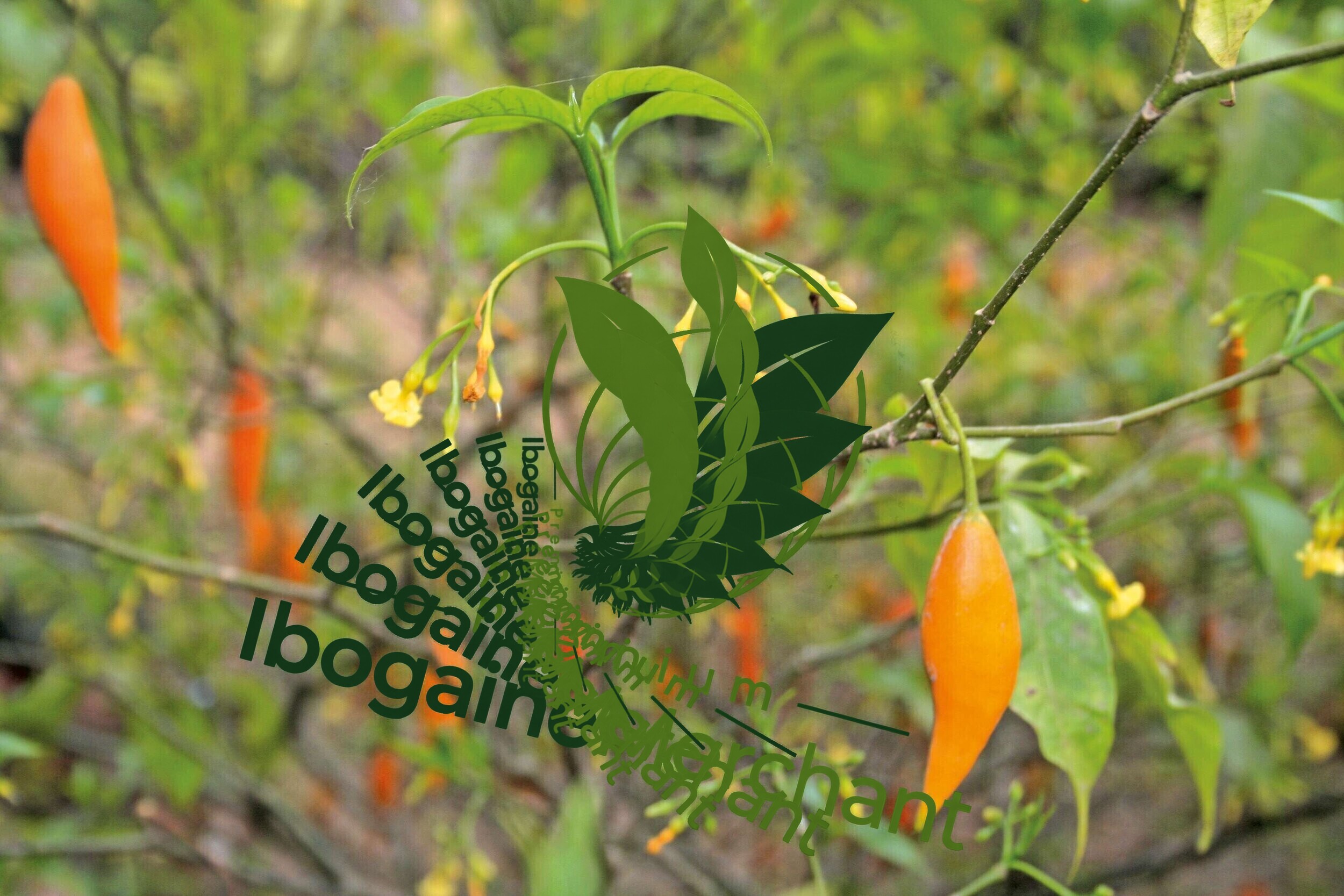
Interest in Tabernanthe iboga has created new questions about how the plant can be cultivated and sourced responsibly.
For Cameroon, this discussion has an agricultural, environmental and economic dimension.
The country has substantial biodiversity, diverse agricultural environments and communities with long-standing experience in farming. Developing a responsible iboga cultivation sector could potentially create new agricultural opportunities while helping reduce dependence on uncontrolled harvesting of wild plants.
However, sustainable cultivation requires more than putting plants into the ground.
It requires careful consideration of propagation, land management, soil health, water, biodiversity, harvesting, traceability and the economic participation of local communities.
The roots and root bark of Tabernanthe iboga have historically been among the plant materials attracting the greatest interest.
This creates a conservation challenge.
When the desired plant material is obtained by removing or damaging roots, harvesting can have a much greater impact on individual plants than collecting renewable above-ground material.
If demand increases without a corresponding increase in cultivation, wild populations may experience greater pressure.
Cultivation provides one potential solution.
A managed agricultural system can produce plants specifically for future harvesting while allowing natural populations to remain protected.
Cameroon contains a wide range of ecological and agricultural environments.
Its geography includes humid forest areas, savannah regions and highland environments.
This diversity means that cultivation strategies should not assume that one farm model will work everywhere.
Site selection should consider:
The most suitable site for an iboga cultivation project should be determined through local agricultural assessment rather than simply selecting land based on availability.
Land selection is one of the earliest sustainability decisions.
A responsible project should consider whether agricultural development could damage valuable ecosystems.
Before establishing a farm, operators should assess:
Clearing mature natural vegetation may create unnecessary ecological impacts.
Healthy soils can reduce the need for intensive external inputs.
Agricultural activities should not create unnecessary pressure on local water supplies.
Developing previously cultivated or appropriately designated agricultural land may present different environmental considerations from clearing natural forest. Tabernanthe Iboga: Plant, Root, Bark, Seeds & Cultivation
Land-use decisions should take into account local communities, land rights and applicable legal requirements.
A sustainable cultivation system should begin with reliable propagation material.
Seeds can be particularly valuable because they allow growers to establish new plants without repeatedly removing mature wild individuals.
A nursery system allows young plants to be monitored before field planting.
Important nursery considerations include:
Good records can establish a link between the original propagation material and later farm production.
A large agricultural population is not automatically a genetically healthy population.
If cultivation depends on a very narrow genetic source, the resulting crop may have reduced diversity.
Maintaining appropriate genetic diversity can be important for long-term resilience.
Potential areas of agricultural research include:
Such research can help determine how different plant populations respond to cultivation conditions.
Healthy soil is one of the foundations of sustainable agriculture.
For long-term iboga cultivation, soil management may include:
The appropriate approach will depend on local soil conditions.
Agricultural inputs should be used carefully.
The objective should not be to eliminate every agricultural input regardless of circumstance, but to use appropriate methods based on actual crop needs.
Integrated approaches can include monitoring plant health and responding to problems before they become severe.
Although Tabernanthe iboga is associated with humid tropical environments, responsible farming still requires water management.
Too little water can stress young plants.
Excessive water can create root problems where drainage is poor.
A well-designed farm should therefore consider:
Water management should be adapted to the local environment rather than based on assumptions about the plant alone.
Because iboga is associated with tropical forest environments, cultivation may benefit from studying the ecological conditions in which the species naturally develops.
This does not necessarily mean that every farm must recreate a natural forest.
Instead, agricultural research can investigate how factors such as:
affect plant establishment and growth.
Agroforestry systems may also deserve investigation where they are appropriate for the local environment.
Agricultural development can affect biodiversity if farms are poorly planned.
Responsible cultivation should therefore consider the surrounding landscape.
Possible approaches include:
A farm does not exist in isolation.
Its environmental footprint includes the land surrounding it.
Harvesting is one of the most important issues for an iboga cultivation project.
If roots are the target material, harvesting can be destructive if performed without appropriate agricultural planning.
A sustainable model must therefore answer a fundamental question:
How can agricultural production obtain useful plant material while maintaining a population of healthy plants capable of regeneration?
Possible research approaches include studying:
These questions should be addressed through agricultural research rather than assumptions.
A farm can potentially be divided into production blocks.
Instead of harvesting every plant simultaneously, growers can establish rotation systems that allow different areas to develop at different times.
A simplified model could involve:
| Farm block | Development stage | Management focus |
|---|---|---|
| Block A | Establishment | Young plant development |
| Block B | Growth | Maintenance and monitoring |
| Block C | Maturity | Production planning |
| Block D | Recovery/replanting | Regeneration |
The exact timeline would need to be determined through cultivation research and local growing conditions.
Sustainable sourcing and traceability should work together.
A research client should ideally be able to receive appropriate information about the origin and identity of botanical material.
A traceability system can record:
Traceability does not necessarily mean revealing sensitive information about farms or individual workers.
It means maintaining sufficient records to understand the history of a material.
Botanical material can vary.
Two samples of the same species may not have identical chemical profiles.
Differences can result from:
Batch identification allows researchers to distinguish between samples and improves the quality of scientific documentation.
Analytical testing can complement botanical identification.
Depending on the research purpose and applicable requirements, laboratories may examine characteristics such as:
The specific tests required depend on the product and intended research application.
Testing should be performed using appropriate analytical methods and qualified laboratories.
Sustainable cultivation is not only an environmental issue.
It can also be an economic-development opportunity.
A larger agricultural project may create work in areas including:
For rural communities, agricultural employment can create income opportunities without requiring workers to relocate to major cities.
Employment becomes more valuable when accompanied by skills development.
An expanding cultivation program can create opportunities for workers to learn about:
Over time, this can contribute to a specialized agricultural knowledge base around iboga cultivation.
Community participation should not be treated simply as a marketing message.
Responsible agricultural development requires practical consideration of:
A sustainable supply chain should create benefits at the production level as well as at the final commercial stage.
The distinction between cultivated and wild material is important.
Potential advantages may include access to naturally established plants.
Potential challenges include:
Potential advantages include:
But cultivation also has challenges:
The most responsible approach may involve conservation, cultivation and scientific research developing together.
There is still much to learn about growing Tabernanthe iboga at agricultural scale.
Research could investigate:
Scientific agricultural studies can replace assumptions with measurable information.
One of the most interesting areas for future research is the relationship between growing conditions and chemical composition.
Natural-product researchers often need to understand why plants grown in different environments can produce different concentrations or profiles of secondary metabolites.
For Tabernanthe iboga, this raises questions about whether factors such as:
influence alkaloid profiles.
Understanding these relationships could improve both agricultural science and research reproducibility.
The scientific landscape around ibogaine is developing rapidly.
Recent reviews continue to identify preliminary evidence while emphasizing the need for stronger clinical research.
At the same time, synthetic chemistry is creating ways to investigate ibogaine-related compounds without depending exclusively on plant extraction.
These developments mean that the future of the plant itself may involve several interconnected areas:
Botanical conservation
Protecting natural populations and ecological knowledge.
Agricultural cultivation
Developing reliable methods for growing the species.
Natural-product research
Studying compounds produced naturally by the plant.
Medicinal chemistry
Creating and evaluating related compounds.
Clinical research
Determining whether specific compounds have useful and sufficiently safe applications.
As research interest expands, researchers need reliable supply chains.
A professional botanical supplier should ideally be able to provide appropriate information about:
For international research supply, regulatory awareness is equally important.
A material that can be legally supplied from one jurisdiction may be regulated differently in another.
Responsible suppliers therefore need to recognize the legal requirements associated with both origin and destination.
A mature supply model should connect five major elements:
The plant must be correctly identified.
Cultivation should protect soil, water and surrounding ecosystems.
Material should be connected to appropriate production records.
Local workers and communities should benefit from agricultural development.
Domestic and international requirements must be considered.
These elements reinforce one another.
Cameroon has the opportunity to develop a responsible agricultural model around iboga without treating the plant solely as a commercial commodity.
A long-term model could combine:
Such an approach can create a stronger foundation than a supply chain dependent entirely on short-term wild harvesting.
It can be, but sustainability depends on agricultural practices, harvesting methods, land management and regeneration.
Cultivation can provide a controlled source of plant material and potentially reduce pressure on wild populations.
Cameroon’s tropical environments include areas potentially suitable for cultivation, but successful production depends on site-specific agricultural conditions.
Seeds provide a means of propagating new plants and developing cultivated populations.
Not necessarily. Chemical composition can vary according to genetics, environment, plant age and other factors, which is why analytical characterization is valuable.
Not necessarily. The legality and sustainability of harvesting depend on local laws, land rights, ecological conditions and harvesting practices. Cultivation can provide an important complementary strategy.
Companies involved in iboga cultivation should ideally measure sustainability rather than simply describe it.
Potential indicators could include:
Measurable indicators allow a company to identify areas for improvement.
The future of iboga cultivation will likely depend on whether agricultural development can keep pace with scientific and commercial interest.
If demand increases, the industry will need more than additional supply.
It will need better supply.
Better supply means:
This is particularly important because the scientific reputation of an emerging botanical supply chain depends partly on the quality and consistency of its source material.
Sustainable cultivation of Tabernanthe iboga in Cameroon represents an opportunity to connect agriculture, conservation, research and local economic development.
The plant’s importance extends from traditional knowledge and biodiversity to modern natural-product science.
As research into ibogaine and related compounds develops, responsible cultivation can provide a foundation for traceable botanical material while reducing reliance on uncontrolled harvesting.
The goal should not simply be to produce more iboga.
The goal should be to develop a system in which cultivation, conservation, scientific research and local communities can benefit together.
For Cameroon, that means treating Tabernanthe iboga as both an agricultural resource and a natural resource requiring long-term stewardship.
Responsible cultivation today can help determine whether the plant remains available for scientific research and future generations tomorrow.
Tags: